 4.8/5
4.8/5
Home ware made from upcycled denim
Upcycled jeans from Kenya
Upcycled jeans from Kenya
Let's get straight to the point: the textile industry is one of the most polluting industries in the world. An estimated 60 billion kilos of textiles and footwear are lost annually.
The vast majority of these items end up in landfills or in nature. Sometimes they're even burned. This also happens in Kenya. That's where Africa Collect Textiles (ACT) comes in. ACT is a social enterprise with a mission to create a circular and inclusive garment industry in Africa. ACT collects clothing using its own collection containers, which are located at its collection partners. These collection partners are paid per kilo of jeans.
Huge amounts of clothing
Much of the clothing and footwear collected in Kenya is second- or third-hand. The majority comes from Europe, Canada, and the United States. On the one hand, it's good that this clothing is reused. On the other hand, it masks the enormous overconsumption of the Western world. It also disrupts the local economy, as local clothing products cannot compete with the cheap "mitumba," which is Swahili for secondhand clothing from the wealthy West.
Collecting jeans for upcycling
The discarded jeans are collected in Africa Collect Textiles' own clothing containers. Sometimes it's necessary to replenish unsellable jeans (unsellable because they're too big for Kenyans, for example) from secondhand markets. For example, if certain colors are needed for weaving the design.
The clothing waste mountain in figures
Every year, millions of new clothing items are added to the market. Not only more clothing, but also cheaper clothing, and as a result, the mountain of clothing waste grows ever larger. Some figures at a glance:
- We produce four times as much clothing as we did ten years ago
- Due to overproduction, 30% of clothing never reaches a wardrobe
- Textiles account for 10% of global CO2 emissions
- Thousands of liters of water are needed to produce one T-shirt
- Polyester clothing contributes to the plastic soup
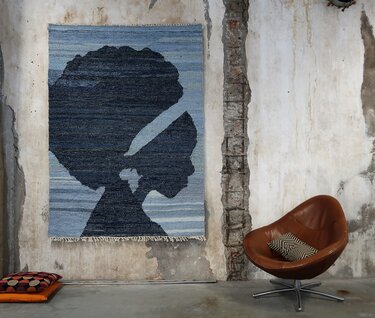
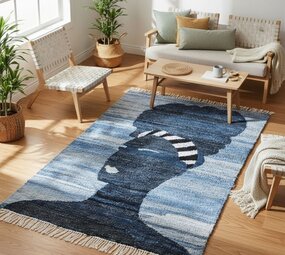
The African Queen rug is suitable for both floor and wall hangings. Each unique rug is numbered and carries the name of the weaver. With an ACT African Queen rug, you not only own a unique and beautiful rug, but you also make a statement to the clothing industry and raise awareness about the ever-growing problem of fast fashion.
Want to see the rug in person? Schedule a showroom appointment! Contact us at [email protected] or call us at 0031411671853 .
Help and save a uniform from the s...
Help and save a uniform...
The African Princess rug is a trib...
The African Princess ru...
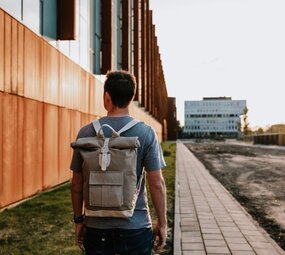
WITH FREE TUMI - Help save a unifo...
WITH FREE TUMI - Help s...
- Unique upcycling items for your interior!
- Meet up with us in our showroom
- Choose your favorite with our WhatsApp-service!
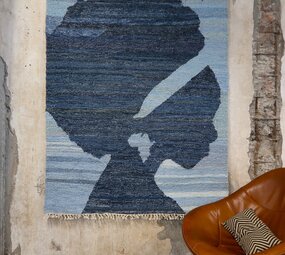
The African Queen rug is a tribute...
The African Queen rug i...
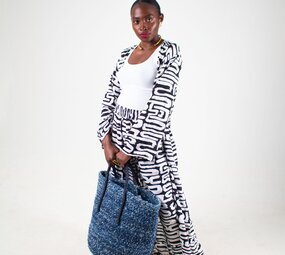
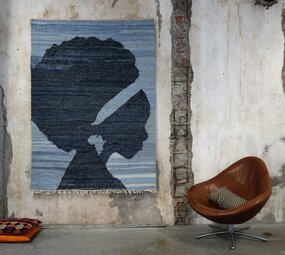
The African Queen rug is a tribute...
The African Queen rug i...

Overige categorieën in ACT - home ware
Home ware made from upcycled denim
Upcycled jeans from Kenya
Upcycled jeans from Kenya
Let's get straight to the point: the textile industry is one of the most polluting industries in the world. An estimated 60 billion kilos of textiles and footwear are lost annually.
The vast majority of these items end up in landfills or in nature. Sometimes they're even burned. This also happens in Kenya. That's where Africa Collect Textiles (ACT) comes in. ACT is a social enterprise with a mission to create a circular and inclusive garment industry in Africa. ACT collects clothing using its own collection containers, which are located at its collection partners. These collection partners are paid per kilo of jeans.
Huge amounts of clothing
Much of the clothing and footwear collected in Kenya is second- or third-hand. The majority comes from Europe, Canada, and the United States. On the one hand, it's good that this clothing is reused. On the other hand, it masks the enormous overconsumption of the Western world. It also disrupts the local economy, as local clothing products cannot compete with the cheap "mitumba," which is Swahili for secondhand clothing from the wealthy West.
Collecting jeans for upcycling
The discarded jeans are collected in Africa Collect Textiles' own clothing containers. Sometimes it's necessary to replenish unsellable jeans (unsellable because they're too big for Kenyans, for example) from secondhand markets. For example, if certain colors are needed for weaving the design.
The clothing waste mountain in figures
Every year, millions of new clothing items are added to the market. Not only more clothing, but also cheaper clothing, and as a result, the mountain of clothing waste grows ever larger. Some figures at a glance:
- We produce four times as much clothing as we did ten years ago
- Due to overproduction, 30% of clothing never reaches a wardrobe
- Textiles account for 10% of global CO2 emissions
- Thousands of liters of water are needed to produce one T-shirt
- Polyester clothing contributes to the plastic soup
The African Queen rug is suitable for both floor and wall hangings. Each unique rug is numbered and carries the name of the weaver. With an ACT African Queen rug, you not only own a unique and beautiful rug, but you also make a statement to the clothing industry and raise awareness about the ever-growing problem of fast fashion.
Want to see the rug in person? Schedule a showroom appointment! Contact us at [email protected] or call us at 0031411671853 .